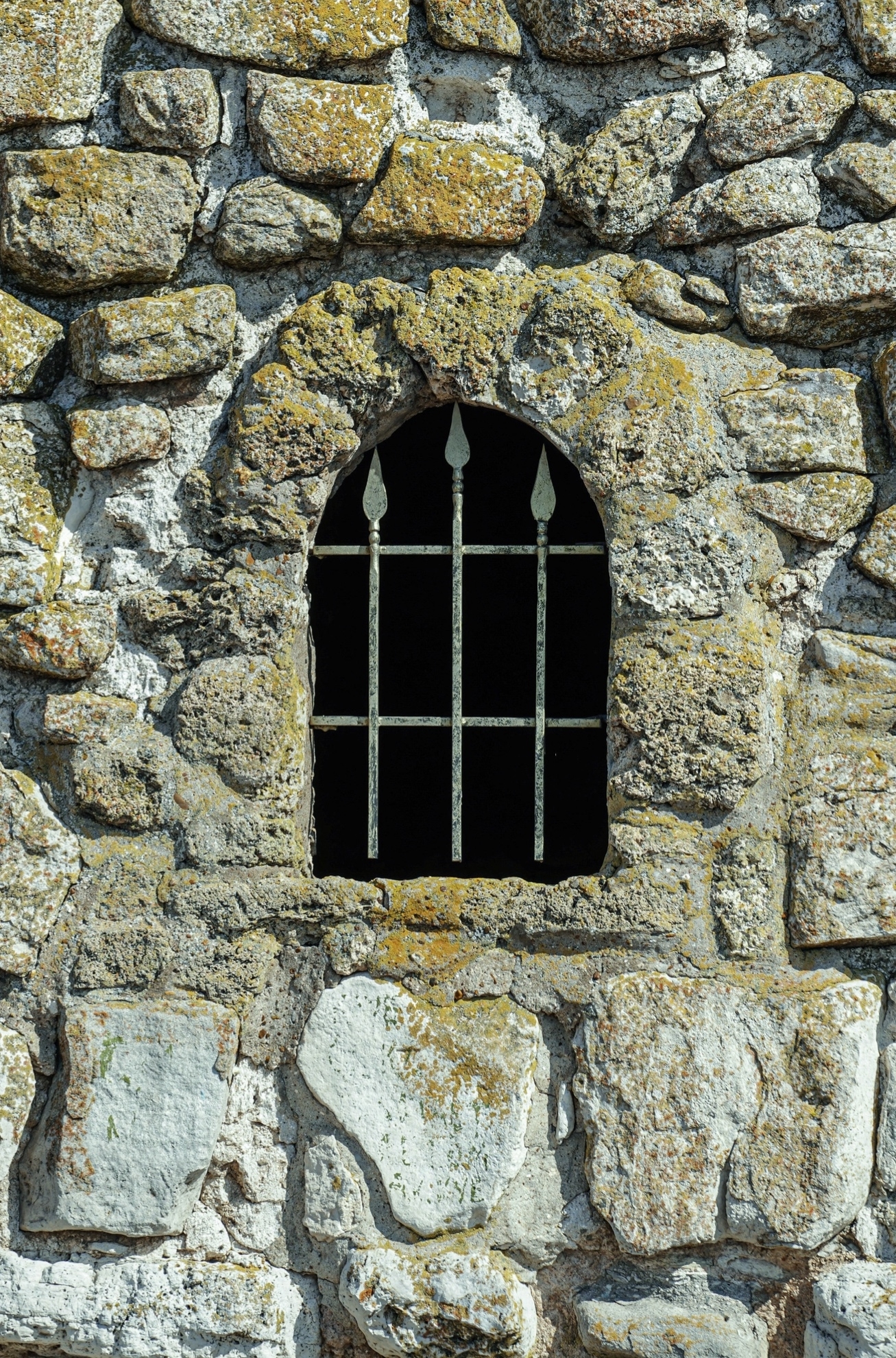
The mausoleum is constructed from various types of stone, each chosen deliberately for its strength, lightness, or decorative properties.
The main body of the walls is built from dense limestone. This is a hard and reliable material that withstands the weather. For the dome and arches, a different, much lighter material was required – porous algal limestone. Its porous structure helped reduce the load on the walls. The lowest part of the mausoleum, which bears the entire weight of the building, is laid with sandstone and breccia – a stone composed of fragments. These served as a reliable foundation. To ensure the walls were even, thin plates of layered limestone were placed between the large blocks.
The entire structure was bound together with a gypsum (alabaster) mortar containing mineral and organic additives. This was likely for increased plasticity and strength.
Fragments of the materials used to build the mausoleum are displayed at the "Tura-khan" visitor center.
The main body of the walls is built from dense limestone. This is a hard and reliable material that withstands the weather. For the dome and arches, a different, much lighter material was required – porous algal limestone. Its porous structure helped reduce the load on the walls. The lowest part of the mausoleum, which bears the entire weight of the building, is laid with sandstone and breccia – a stone composed of fragments. These served as a reliable foundation. To ensure the walls were even, thin plates of layered limestone were placed between the large blocks.
The entire structure was bound together with a gypsum (alabaster) mortar containing mineral and organic additives. This was likely for increased plasticity and strength.
Fragments of the materials used to build the mausoleum are displayed at the "Tura-khan" visitor center.