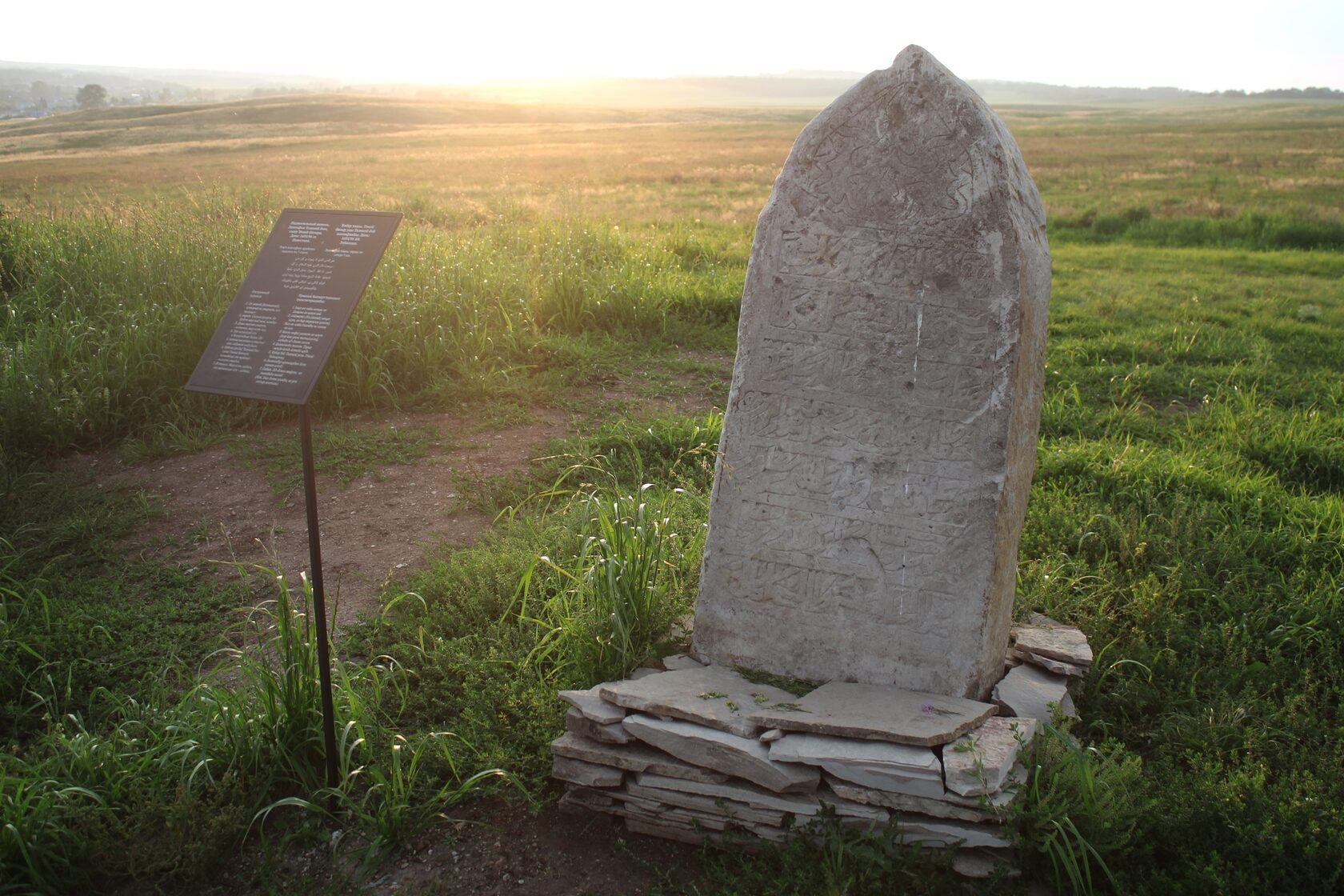
Near the Tura-Khan Mausoleum lies a valuable epigraphic monument – a 17th-century tombstone. It was erected in 1107 AH (1695-1696 Gregorian calendar) in honor of Takay-batyr, son of Telyakay-biy, a prominent representative of the Bashkir Kobaу clan.
The text of the epitaph contains profound meaning and consists of seven lines in Arabic:
هو الحی الذی لا يموت و كل حی
\ سيموت قال النبی عليه السلام و كل
\ نفس ذا ئقة الموت صدق الدنیا ساعة
\ فجعلها طاعة تاریغ منکدا یوزدا یتیدا اردی
\ قوباو تلکی بی اوعلی طقی باطورنک
\ بیلکوسیدور ایر انلاردین دوعا
\ صدق الدنیا جیفة طالبها کلاب
The inscription begins with Quranic verses: "He is the Living [the Almighty], who does not die. The Prophet, peace be upon him, said: every soul will taste death." This is followed by a philosophical exhortation: "The world is an hour, so use it in pious deeds." The central part indicates the name of the deceased: "A monument to Takay-batyr, son of Telyakay-biy, of the Kubovo [clan]", and the text concludes with a metaphor: "The world is carrion, and all who desire it are dogs."
The presence of this epitaph confirms that the area around the mausoleum historically served as the ancestral necropolis of the Bashkirs of the Kobaу tribe. The title "batyr" indicates that the deceased belonged to the military nobility and held a high social status in Bashkir society of that period.
The monument represents significant cultural and historical value. Its stylistic design demonstrates a direct similarity to the epitaphs at the Hussein-bek Mausoleum. Of particular value is the presence in the text of elements of the Bashkir language in the spelling of names and numerals.
This artifact serves as tangible evidence of the developed artistic traditions and social structure of Bashkir society in the 17th century.
The monument is accessible for viewing by all visitors to the complex on the way to the Tura-Khan Mausoleum.
The text of the epitaph contains profound meaning and consists of seven lines in Arabic:
هو الحی الذی لا يموت و كل حی
\ سيموت قال النبی عليه السلام و كل
\ نفس ذا ئقة الموت صدق الدنیا ساعة
\ فجعلها طاعة تاریغ منکدا یوزدا یتیدا اردی
\ قوباو تلکی بی اوعلی طقی باطورنک
\ بیلکوسیدور ایر انلاردین دوعا
\ صدق الدنیا جیفة طالبها کلاب
The inscription begins with Quranic verses: "He is the Living [the Almighty], who does not die. The Prophet, peace be upon him, said: every soul will taste death." This is followed by a philosophical exhortation: "The world is an hour, so use it in pious deeds." The central part indicates the name of the deceased: "A monument to Takay-batyr, son of Telyakay-biy, of the Kubovo [clan]", and the text concludes with a metaphor: "The world is carrion, and all who desire it are dogs."
The presence of this epitaph confirms that the area around the mausoleum historically served as the ancestral necropolis of the Bashkirs of the Kobaу tribe. The title "batyr" indicates that the deceased belonged to the military nobility and held a high social status in Bashkir society of that period.
The monument represents significant cultural and historical value. Its stylistic design demonstrates a direct similarity to the epitaphs at the Hussein-bek Mausoleum. Of particular value is the presence in the text of elements of the Bashkir language in the spelling of names and numerals.
This artifact serves as tangible evidence of the developed artistic traditions and social structure of Bashkir society in the 17th century.
The monument is accessible for viewing by all visitors to the complex on the way to the Tura-Khan Mausoleum.