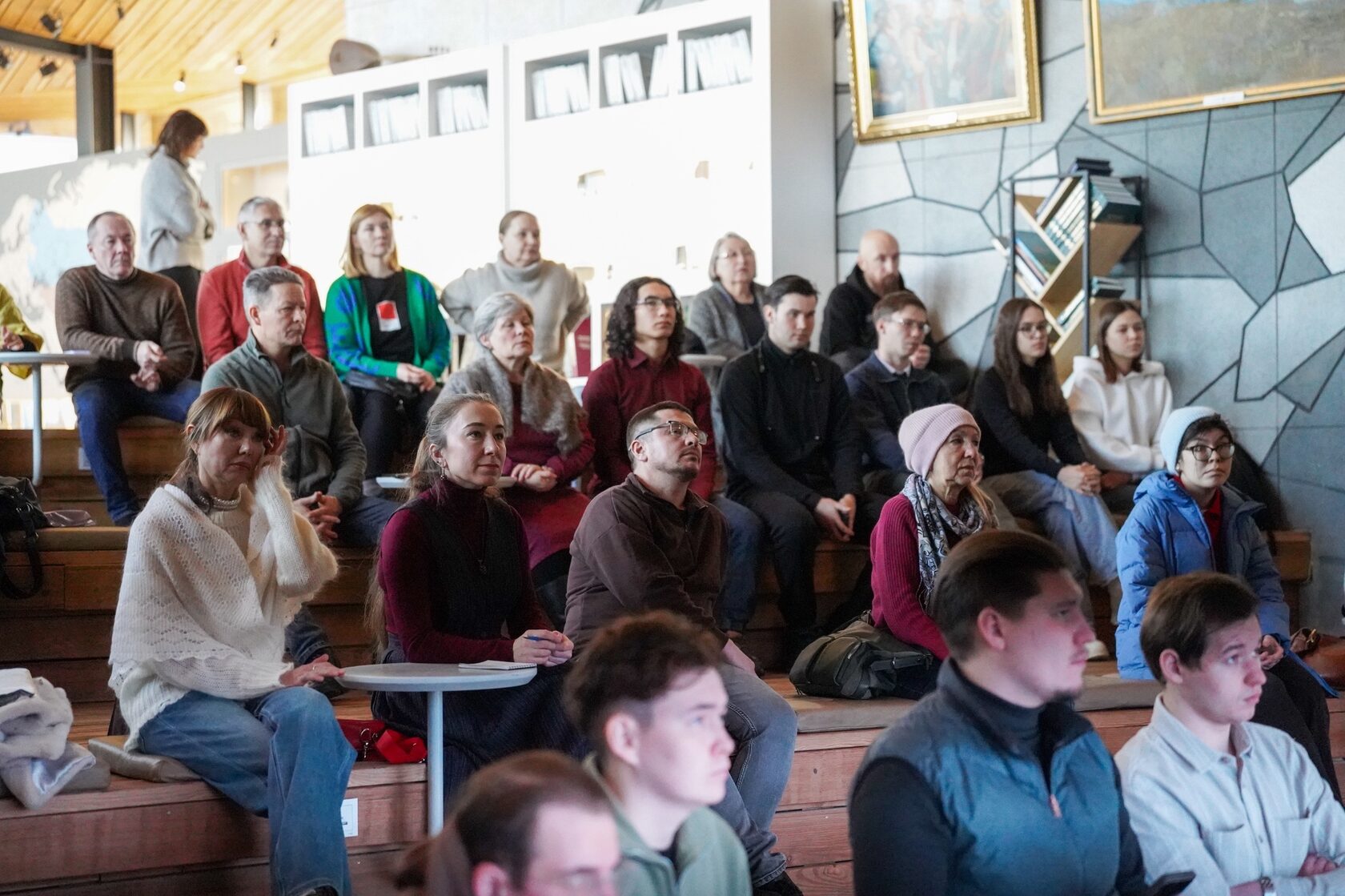
The lecture presented the results of a craniological study of burial series obtained during excavations (2022-2024) of the Muslim necropolis around the Tura-khan mausoleum.
It was interesting to learn from the lecture about the presence of indicators of horseback riding on the bones of the buried individuals. However, such equestrian signs are absent in Khuseinbek, who died young.
Also of interest is a healed blunt head injury in burial 2. The frontal bone was literally pushed into the cranial cavity, and the fracture from the impact spread across the entire facial skeleton, yet this did not prevent him from living for some time afterward. Such "resilience" is quite intriguing, considering that we currently know nothing about the level of medieval medicine.
Most importantly, the lecturer clearly stated that anthropology examines biological characteristics, but by no means ethnic markers. However, the study of the craniological collection still allows for a number of conclusions. When asked who was buried near the mausoleum, Vladimir Vladimirovich noted that "preliminarily, in quotes and without quotes, it can be said that the data allow us to choose between it being either a nomadic population that came from somewhere (preliminarily, according to available isotopic data, it is definitely not a local population). Or these are some Chiyalik people, but definitely not those buried in nearby burial grounds, namely in Gornovsky and Nizhnekhozyatovsky. The greatest morphological similarity is found with burials in the Syntysh-Tamak kurgan burial ground, which also belong to nomads, morphologically similar to those nomads represented in monuments of an earlier period – Mryasimov and Karayakup, Bekeshevo."
Similar morphological variants (which are present in the burials near the Tura-khan mausoleum) are found among the medieval population of southern Kazakhstan and southern Siberia. Such similarity is evidence of possible kinship ties or common origin ties, either direct connections or early connections.
It was interesting to learn from the lecture about the presence of indicators of horseback riding on the bones of the buried individuals. However, such equestrian signs are absent in Khuseinbek, who died young.
Also of interest is a healed blunt head injury in burial 2. The frontal bone was literally pushed into the cranial cavity, and the fracture from the impact spread across the entire facial skeleton, yet this did not prevent him from living for some time afterward. Such "resilience" is quite intriguing, considering that we currently know nothing about the level of medieval medicine.
Most importantly, the lecturer clearly stated that anthropology examines biological characteristics, but by no means ethnic markers. However, the study of the craniological collection still allows for a number of conclusions. When asked who was buried near the mausoleum, Vladimir Vladimirovich noted that "preliminarily, in quotes and without quotes, it can be said that the data allow us to choose between it being either a nomadic population that came from somewhere (preliminarily, according to available isotopic data, it is definitely not a local population). Or these are some Chiyalik people, but definitely not those buried in nearby burial grounds, namely in Gornovsky and Nizhnekhozyatovsky. The greatest morphological similarity is found with burials in the Syntysh-Tamak kurgan burial ground, which also belong to nomads, morphologically similar to those nomads represented in monuments of an earlier period – Mryasimov and Karayakup, Bekeshevo."
Similar morphological variants (which are present in the burials near the Tura-khan mausoleum) are found among the medieval population of southern Kazakhstan and southern Siberia. Such similarity is evidence of possible kinship ties or common origin ties, either direct connections or early connections.
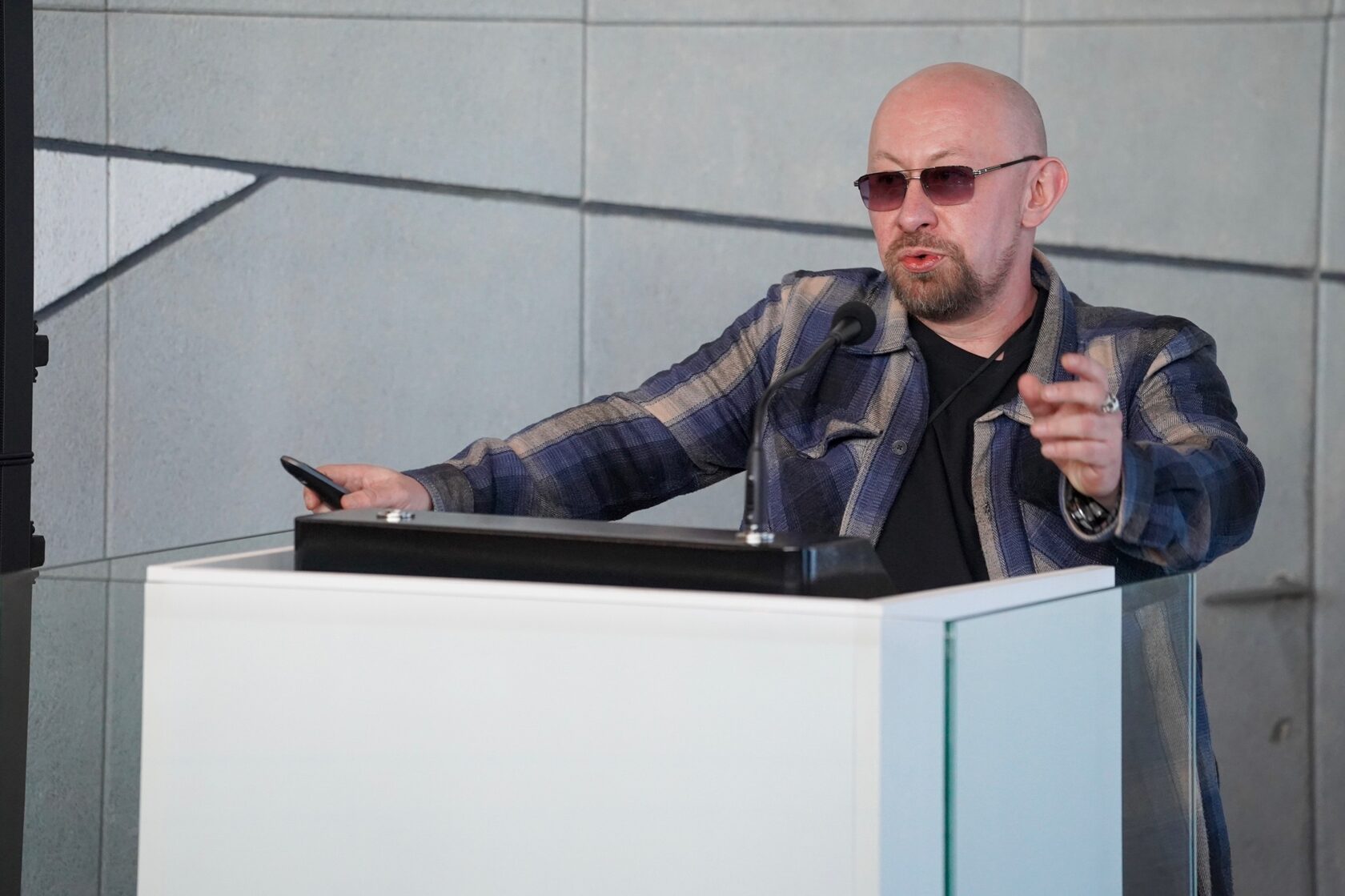
Photos from the lecture: https://vk.ru/album-226634666_311358397
Recording of V.V. Kufterin's lecture: https://vk.com/wall-226634666_1368
We look forward to seeing you at future lectures – stay tuned for announcements!
Recording of V.V. Kufterin's lecture: https://vk.com/wall-226634666_1368
We look forward to seeing you at future lectures – stay tuned for announcements!